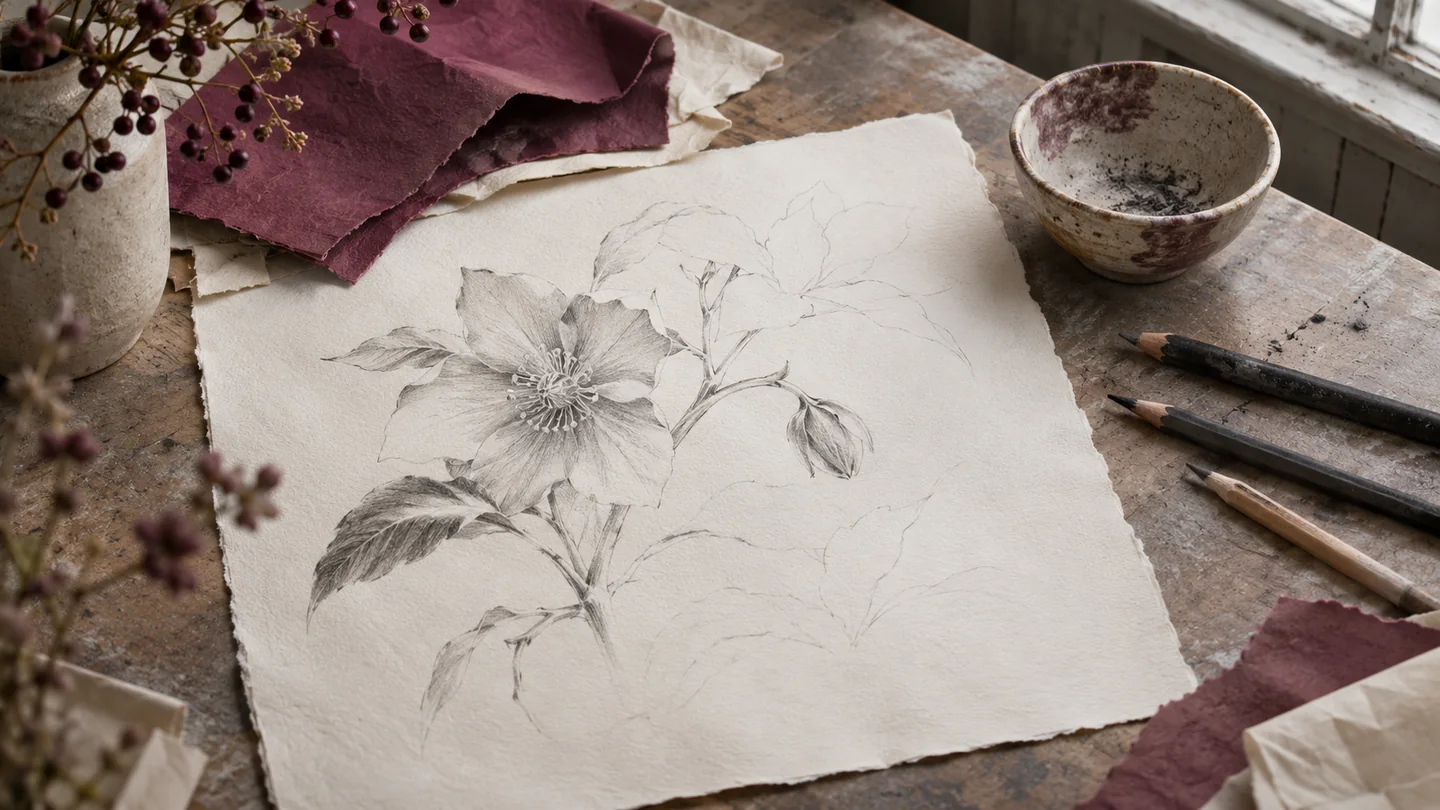
Some drafts need a deadline. Others need permission to remain a question for a while.
pmaPMA Journal · 2 min read
ADVERTISEMENT
AI-generated editorial image · PMA Journal
THE SHORT VERSION
Give unfinished work a place, a note about its next step, and an honest decision about returning.
Separate a sketch from a promise
An idea in a notebook is not automatically a project you have committed to deliver. Treating every experiment as an obligation can make exploration feel expensive. Identify the work with a real deadline or a promise to someone else. Then look at the rest as a collection of possibilities. A sketch can be useful because it taught you something, even if it never becomes a finished piece.
ADVERTISEMENT
Leave a way back in
When you stop, write a short note about what you were trying and the next small move you might make. Save the relevant files together with recognizable names. The note does not have to justify the project. It should make restarting less dependent on recovering a particular mood. A sentence such as “try a quieter ending” can be more useful than an elaborate plan you will not want to read.
Choose what needs a boundary
Some unfinished work stays open because the question is interesting. Other work stays open because the target keeps moving. For the latter, set a limited experiment: one page, one variation, one hour of revision. Decide what that experiment will help you learn. A boundary can give a playful idea enough shape to become visible without requiring it to become your most important work.
Allow yourself to close a folder
Returning is a choice. You may discover that an old draft no longer interests you, or that one detail belongs in a different project. Archive it with enough context to recognize it later and release the expectation of finishing. Keep the material you value, respect any commitments you have made, and let the rest become part of your working history. A creative practice needs room for attempts as well as outcomes.